
Volkswagen EA888 Engine: Reliability and Performance
Mod Central
Share This Post
The Volkswagen EA888 engine is one of the most well-known and widely used performance engines in the Volkswagen/ Audi group. Used in a massive range of models such as the Golf GTI, Golf R, Audi S3, Cupra Leon, and more, the 2.0-litre turbocharged engine has earned a reputation in the last 15 years for strong performance, impressive tuning potential, and good reliability when maintained properly. But how reliable is the EA888 once you start running more power and how much can it handle?The EA888 Engine
The EA888 engine has gone through multiple revisions since its introduction many years ago, with the most common versions being:- (2006–2009) EA888 Gen 1 – Found in early Audi and VW models. Less tuning potential compared to later generations.
- (2008–2015) EA888 Gen 2 – Improved efficiency and power delivery, but known for oil consumption issues.
- (2012–present) EA888 Gen 3 – Found in the Mk7 Golf GTI, Mk7 Golf R, Audi S3 8V, and other MQB-platform cars. Stronger internals and better reliability.
- (2020–present) EA888 Gen 4 – Powering the latest Mk8 Golf R, Audi S3 8Y, and Cupra models, featuring updated turbochargers and software improvements.
How Reliable is the EA888 Engine?
The EA888 is generally reliable, but like any high-performance turbocharged engine, it has some known weak points.Common Reliability Issues
-
Oil Consumption (Gen 2)
- The second-generation EA888 was notorious for excessive oil consumption due to poor piston ring design. This issue was largely resolved in Gen 3 and Gen 4.
-
Carbon Buildup
- Direct injection engines tend to suffer from carbon buildup on intake valves over time, leading to performance loss. Blasting every 40,000-50,000 miles is recommended to prevent this.
-
PCV System Failure
- The Positive Crankcase Ventilation (PCV) valve can fail, causing rough idling and boost-related issues. Upgrading to an aftermarket catch can helps prevent this.
-
Water Pump & Thermostat Housing Leaks
- A common weak spot, particularly on Gen 3 engines. The plastic housing can crack, leading to coolant leaks. Replacing it with an upgraded metal version is a good long-term fix. One day Volkswagen will learn how to make a proper water pump, we hope.
-
DV (Diverter Valve) Failure
- The stock electronic diverter valve can fail under high boost levels, leading to boost leaks. Upgrading to a stronger aftermarket DV can help.
-
Timing Chain Tensioner (Early Gen 3)
- Some early Gen 3 engines had timing chain tensioner issues, leading to potential chain stretch. Most later models have an improved design.
The Verdict
When properly maintained, the EA888 is a solid engine capable of running for a very long time. Of course regular servicing, high-quality oil changes, and preventive maintenance go a long way in making this happen.
Tuning the EA888 Engine
The EA888 has incredible tuning potential, with some modified examples exceeding 600bhp while retaining good drivability. Here’s a breakdown of its tuning stages:(Remap Only) Stage 1 Tune – 280-310bhp
- A simple ECU remap increases power by 50-70bhp with no hardware changes.
- Works well with 99-octane fuel, as these engines can be sensitive to fuel quality, even when in stock form.
- Improves throttle response and torque delivery.
(Intake, Downpipe, Intercooler) Stage 2 Tune – 350-400bhp
- Requires a high-flow intake, sports/decat downpipe, and an upgraded intercooler.
- Turbo efficiency is improved, reducing heat soak and turbo lag.
- Strengthening the clutch (on manual cars) or upgrading the DSG tune (on automatics) is recommended as you will need to raise the torque limiter.
(Hybrid Turbo or Big Turbo) Stage 3 Tune – 450-600bhp
- Upgrading to a hybrid IS38 turbo (used in the Golf R and Audi S3) can push power beyond 450bhp.
- A full big turbo upgrade (such as a Garrett or TTE turbo) can exceed 550-600bhp with supporting mods.
- Additional upgrades required:
- High-pressure fuel pump (HPFP) and upgraded injectors.
- Forged internals for high-boost reliability.
- DSG tuning or uprated clutch to handle the torque.
Recommended
Supporting Modifications
- Upgraded intercooler – Prevents heat soak, essential for tuned engines.
- Performance exhaust system – Reduces backpressure and enhances sound.
- Oil catch can – Helps with carbon buildup and improves longevity.
- Upgraded suspension & brakes – With big power increases, stopping and handling modifications are a must.
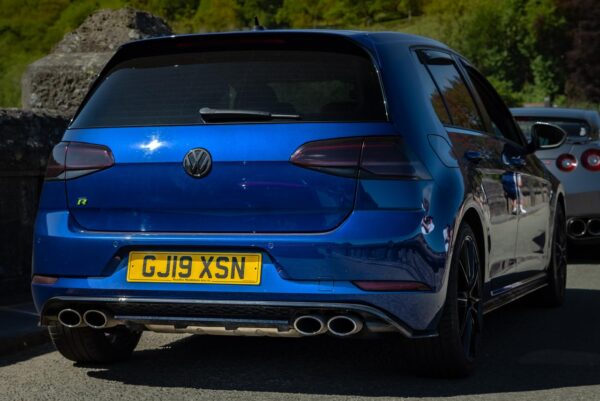
EA888 Engine Driveability
One of the best things about tuning the EA888 is that it remains highly drivable even with big power increases.- Stage 1 and Stage 2 tunes feel OEM+ with minimal impact on reliability.
- Stage 3 builds become more aggressive but remain street-friendly if tuned correctly.
- DSG-equipped models handle power well with a software tune to improve gear shifts.
Is the EA888 Worth Modifying?
Absolutely. The EA888 is one of the best 2.0-litre turbo engines for performance tuning. It offers:- Easy tuning potential – A simple remap unlocks significant gains.
- Good reliability – As long as it's well-maintained.
- Excellent driveability – Even when modified for big power.
